Only Defiance's capacitor ETF holds a swap instead of the stocks
Defiance's AI Capacitors & MLCC ETF CAPA, listed on August 26, held a swap worth 99% of its $3.9 million on September 30, 2026.

Key takeaways
Defiance listed a capacitor fund on Wednesday, August 26. On Wednesday, September 30, the fund owned none of the stocks in its index.
One swap on that index was 99% of the $3.9 million in the Defiance AI Capacitors & MLCC ETF CAPA, renamed with its index on Thursday, September 10. The other lines were a government money-market fund and cash.
The prospectus lets the fund buy the shares or replicate the index with a derivative, including a total return swap, and the latest holdings use the swap. Financing costs on that contract can lower the return, the documents warn, and the other side can fail to pay.
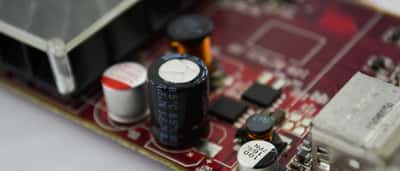
The fund is passive. It tries to match the BITA AI Capacitors & MLCC Index before fees, not to beat the index or to sell when markets fall. The index is built to hold 8 to 15 companies that design, make or supply advanced capacitors for AI equipment. That includes MLCCs, multilayer ceramic capacitors, small parts that store and release charge so voltage on a board stays steady.
A company needs at least 50% of its revenue from that work, or what the index calls material involvement. At least 10% of its shares have to be available to trade.
The first prospectus gave every name the same weight. A supplement on Tuesday, August 25, the day before the first trade, replaced that with the value of shares the public can trade. A 20% ceiling on any one company applies at each quarterly review, in January, April, July and October, not every day.
Equal weight would have spread the fund across those 8 to 15 names. The weights Defiance published for Monday, August 24 already put 23% in TDK, in Japan, and 20.2% in Samsung Electro-Mechanics, in South Korea. By Thursday, September 24, those two companies and Murata Manufacturing, also in Japan, were 62% of the index.
Because the fund is non-diversified, a few holdings can be a large share of it. The prospectus also expects the fund to concentrate in technology hardware, to the same extent as the index.
Sylvia Jablonski, Defiance's chief investment officer, said on listing day, "The market has spent three years pricing the chips. CAPA is about what powers them."
Two firsts on the same morning
Defiance called CAPA the first U.S. fund of its kind, based on its search of funds trading as of Monday, August 24. The same morning, Tema renamed the Power Semiconductor ETF, ticker SIC, which had traded since Monday, August 17. It is now the Tema MLCC & PowerSemi ETF PSOX, and Tema called it the first of its kind.
PSOX holds capacitor makers alongside power-semiconductor companies, including Delta Electronics and Bloom Energy, and charges 0.75% a year.
Roundhill's actively managed fund of MLCC and electronic-component makers, CCML, began trading on Wednesday, September 9, at 0.65% a year. It holds Murata, Samsung Electro-Mechanics and Taiyo Yuden as shares, and uses swaps for Chinese names and some Taiwanese ones. Roundhill says those swaps keep the fund inside the diversification tests for a regulated investment company.
Global X listed its own actively managed fund, MLCC, on Friday, September 11, at 0.75% a year. As of Tuesday, September 29, its largest holdings were the shares, led by Murata and Samsung Electro-Mechanics.
99% of CAPA is a single swap
On Wednesday, September 30, CCML had $8.2 million, PSOX had $4.7 million, and CAPA had $3.9 million. Global X reported $2.6 million as of Tuesday, September 29. The fund that listed first on a capacitor-only pitch was smaller than Roundhill's, which listed two weeks later.
In each session from Thursday, September 17 through Tuesday, September 29, volume was between 2,000 and 7,800 shares.
Five days before the listing, on Friday, August 21, Defiance and Tidal Financial Group said they would close eight funds. The announcement called the closures part of a review of the lineup and of investor demand.
CAPA charges 0.71% a year, and the prospectus lists no fee waiver. That is more than Roundhill's 0.65% and less than the 0.75% on the Global X and Tema funds.
A buyer of CAPA does not get the shares the other three hold. At that fee, the buyer gets one swap on an index that already had 23% in TDK, and the prospectus says financing costs can cut the return.
Want more of our stories in Google’s Top Stories? Add etf.net as a preferred source on Google
ETFs in this story
Frequently asked questions
What does CAPA hold instead of the stocks?
On September 30 one swap on the index was 99% of the $3.9 million fund, and the other lines were a government money-market fund and cash.
Do the other capacitor ETFs hold the shares?
A buyer of CAPA does not get the shares the other three hold: Global X led with the shares, Tema holds capacitor makers alongside power-semiconductor companies, and Roundhill holds three names as shares while using swaps for Chinese and some Taiwanese ones.
What does CAPA charge?
CAPA charges 0.71% a year with no fee waiver listed, more than Roundhill's 0.65% and less than the 0.75% on the Global X and Tema funds.
Can the swap cut the return?
The documents warn that financing costs on the swap can lower the return and that the other side can fail to pay.