After the Fed hike, 3,480 stocks rose. The S&P 500 still needed chips
On Thursday, September 17, 2026, 3,480 U.S. common stocks advanced and 2,092 declined; the S&P 500 fund gained 1.13% while equal-weight rose 0.49%.
Key takeaways
The eight largest positive contributors produced two-thirds of Thursday's S&P 500 gain, even as most U.S. stocks finished higher. The count and the cap-weighted index finally pointed the same way. The dollars did not spread out with them.
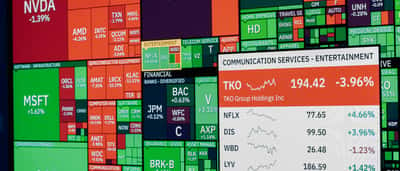
At the 4 p.m. Eastern close, 3,480 stocks advanced, 2,092 declined and 251 were unchanged among 5,823 U.S. common stocks listed on the NYSE, Nasdaq and NYSE American (ETFs, funds, foreign listings, FX and crypto symbols excluded). That is a 59.8% advance share, a day after the Federal Reserve raised rates for the first time since 2023 and most names fell. The S&P 500 fund SPY still gained more than twice as much as the equal-weight S&P 500 fund RSP: 1.13% against 0.49%, a 0.65 percentage-point gap. The Nasdaq-100 fund QQQ rose 1.73%. The Russell 2000 small-cap fund IWM rose 0.51%.
Reuters, writing Thursday, tied Wall Street's bounce to easing oil prices, dropping Treasury yields and solid labor data. The Labor Department reported that initial jobless claims fell by 10,000 to 196,000 in the week ended September 12. West Texas Intermediate crude fell 1.1% to $101.34 a barrel, and the 10-year Treasury yield was 4.94%.
Four semiconductor stocks produced half of the Nasdaq-100 gain
Micron, AMD, Nvidia and Intel contributed 0.88 percentage points, 51% of QQQ's 1.73% gain. 24/7 Wall Street, writing Thursday, linked Intel's move to reports of early talks with SK Hynix to produce memory chips at Intel's Ohio complex, and described a third consecutive session of semiconductor gains. That was not a uniform bid for large growth: T-Mobile was the worst drag in the Nasdaq-100 fund, and Netflix also fell.
Intel gained 7.7%; T-Mobile lost 5.6%
Chips did the sharp work in the S&P 500 fund too. Nvidia and Micron sat among SPY's four largest contributors, together with Apple and Microsoft, for 0.48 percentage points of the move. The eight largest positive contributors accounted for two-thirds of it. Nvidia, an 8.0% weight, rose 2.5% and did the most work; Apple added 1.4% and Microsoft 1.5%. The fund's ten largest positions are 38.2% of assets, so a handful of names can still dominate a day on which thousands of stocks rise.
Fourteen of 20 mega-cap stocks rose, including Nvidia, Apple, Microsoft, Amazon (up 2.1%), Broadcom (2.3%) and Tesla (2.3%). The six that fell were Berkshire Hathaway Class B, off 2.0% and the largest named drag on SPY; Netflix; Walmart, down 0.7%; Mastercard and Visa, each slightly lower; and Exxon Mobil, which finished barely down. Those six did not offset the chip and mega-cap gains in the cap-weighted funds.
Equal-weight had no such engine. Moderna was RSP's top contributor at 0.05 percentage points. Eight names together accounted for only about a third of that fund's gain, which is what equal weight is built to do: it rose because hundreds of S&P 500 stocks rose a little, not because a few rose a lot.
Equal-weight S&P 500 is still below its 50-day average
A majority-up session is the textbook picture of a broad market. The funds that hold the S&P 500 told a more concentrated story.
That concentration is the risk if the chips stop leading. In his June 30, 2026, Global Market Structure and Flows review, Citadel Securities' Scott Rubner put the ten largest companies at nearly 40% of the S&P 500, near record levels, and argued that anyone holding a broad index fund was carrying more semiconductor risk than the label suggests. Thursday was a session of that structure: four chip stocks produced half the Nasdaq-100 gain.
SPY closed at $762.60, above its 50-day average of $759.53; Wednesday's close was $754.05, so the bounce carried it back through that line. RSP closed at $213.31 against a $217.27 average and never got there. IWM remains further below its own 50-day line. Year to date the two S&P 500 funds are still nearly even, up 12.4% and 12.3%. The split is recent, and Thursday did not close it.
If you hold the cap-weighted S&P 500, Thursday looked like a recovery. If you hold equal-weight, it was a partial refill.
SPY recouped Wednesday; equal-weight did not
- Wednesday
- Thursday
- SPY
- Wednesday −0.4%
- Thursday +1.1%
- RSP
- Wednesday −0.8%
- Thursday +0.5%
- QQQ
- Wednesday +0.03%
- Thursday +1.7%
- IWM
- Wednesday −0.4%
- Thursday +0.5%
Across Wednesday and Thursday together, SPY is up 0.69% and RSP is still down 0.30%. The Nasdaq-100 fund gained 1.76% over those two sessions. The small-cap fund gained 0.08%, essentially unchanged through the hike and the bounce.
ETFs in this story
Frequently asked questions
How broad was the advance?
Among 5,823 U.S. common stocks, 3,480 advanced and 2,092 declined, a 59.8% advance share.
Which stocks did the work?
Micron, AMD, Nvidia and Intel drove half the Nasdaq-100 gain, and Nvidia, Micron, Apple and Microsoft led the S&P 500 fund.
Why did the bounce happen at all?
Reuters tied it to easing oil prices, falling Treasury yields and solid labor data, with jobless claims down to 196,000.
Does concentration show up in the index itself?
Yes: the S&P 500 fund's ten largest positions are 38.2% of assets, so a few names can dominate a day when thousands of stocks rise.