Al-Alimi orders a fight for Saudi oil's southern way around Hormuz
Rashad al-Alimi on Sunday, October 4, ordered Yemen's forces to retake all Houthi-held land, including the Red Sea coast and Bab el-Mandeb, where Saudi crude sailing south fell from above 3.5 million barrels a day in early July to a few hundred thousand in August.
Key takeaways
Rashad al-Alimi on Sunday ordered Yemen's forces to take back the land the Houthis still hold. The part that matters to oil is the Red Sea coast they seized in September, and Bab el-Mandeb, the strait at the end of it.
That coast sits on Saudi Arabia's way around the Strait of Hormuz, the sea lane that carries Gulf oil out to the ocean. The lane is still short of its old volume. Kpler's count of non-Iranian oil getting through Hormuz stood at about 74% of the volume before the war in the week through September 29.
Iran's parliament speaker, Mohammad Baqer Qalibaf, said on Sunday the strait will not reopen until seven conditions in a June interim agreement with the United States are met.
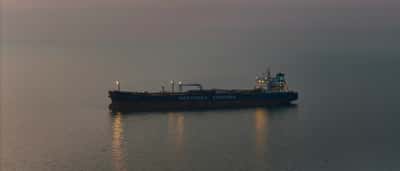
The other route is the 7 million-barrel-a-day East-West pipeline, which carries crude from the Gulf fields to Yanbu, a Saudi port on the Red Sea. From there, oil bound for Asia either sails south through Bab el-Mandeb, past the coast the Houthis hold, or takes the long way north through Egypt. The Houthis have threatened Saudi ships in the strait.
Ying Cong Loh, a crude analyst at Kpler, said west-coast Saudi crude passing Bab el-Mandeb averaged about 3 million barrels a day in the weeks before attacks on the tankers Encelia and Layla on July 22, and about 1.5 million in the six days after. Ships were still getting through.
By August the same flow was down to a few hundred thousand barrels a day, Kpler said, from above 3.5 million in early July, as the cargoes turned north.
Drone strikes shut the pipeline on September 11. Saudi Arabia blamed an Iraqi militia, and Baghdad said the drones were launched from Iraq. The line restarted on September 22, and by Friday it was back above 80% of capacity.
A person familiar with the matter said Aramco was pumping close to 6 million barrels a day, with about 4.5 million left for export after the west-coast refineries took their share. That is oil at Yanbu. It is not oil sailing past the Houthis.
No town taken
Al-Alimi, chairman of the Saudi-backed Presidential Leadership Council, announced the campaign from Riyadh, where he is also commander-in-chief of the armed forces. He said every chance to ease the fighting had already been tried. The aim he set was to reclaim the remaining territory and extend state authority across the whole country.
"The military operations we are about to launch are not a war against our people in Sanaa, Hodeidah, and Saada," he said. "They are not a war against any sect or tribe."
Regional and Western officials said earlier this week that the plan has Saudi Arabia leading the air war and Yemeni forces fighting on the ground. The address praised Saudi Arabia's support.
Outside Taiz, the Houthis were still advancing. They have besieged that government-held city for more than a decade. Military sources said that in the last two days they took more of the hills around it and pushed toward the last road to Aden, where his government sits.
The speech announced an order. It did not announce a captured town.
The fighting was already underway before he spoke. On Saturday the government side reported strikes on Houthi targets, including in Sanaa. Early Sunday the Saudi-led coalition said its forces had carried out 97 targeting operations on the Tor al-Baha front and the Taiz axis.
The Houthis said they had fired missiles and drones at an Aramco site in Riyadh. Turki al-Maliki, the coalition spokesman, called that claim misleading.
What would show the threat is real
When the pipeline was shut last month, the strain showed up in freight and in diesel. On September 17, Reid I'Anson of Kpler put the cost of shipping a barrel from the Middle East Gulf to Asia at about $30, roughly $10 above the rate from the Gulf of Oman, and tied the gap to the risk of passing Hormuz. He put diesel from Yasref at Yanbu at roughly 200,000 barrels a day.
If the fighting reaches the ships in the strait or at Yanbu, that diesel and the cost of hiring a tanker are what would move.
The Breakwave Tanker Shipping ETF BWET holds futures on the cost of moving crude by tanker, led by the Middle East Gulf-to-China voyage. It last traded on Friday.
BWET closed Friday at $873
- $873+5.7%
- +33%
- +92%
No crude future and no freight future had priced the order by Sunday afternoon in New York.
A Yanbu loading that does not happen, or a jump in tanker freight when the market reopens, is what would show the threat becoming real.
ETFs in this story
Frequently asked questions
What did Rashad al-Alimi order on October 4?
He ordered Yemen's forces to retake all Houthi-held land, including the Red Sea coast the Houthis seized in September and Bab el-Mandeb.
Why does the Red Sea coast matter for oil?
Saudi crude piped to Yanbu to get around Hormuz has to sail south through Bab el-Mandeb past the Houthi-held coast or take the long way north through Egypt.
How much Saudi crude is still passing Bab el-Mandeb?
Kpler said the flow fell from above 3.5 million barrels a day in early July to a few hundred thousand in August as cargoes turned north.
Have oil or freight markets reacted to the order?
No crude or freight future had priced the order by Sunday afternoon in New York, though BWET had already risen 32.7% over the five days through Friday.