Saudi oil is boxed in: pipeline shut, Red Sea barred, a ship burning in Hormuz
Saudi Arabia's East-West pipeline, which had been moving 4 million to 5 million barrels a day, is shut, Houthi forces bar Saudi cargo from the Red Sea, and UKMTO reported a projectile strike in the Strait of Hormuz on Saturday, September 12.
Key takeaways
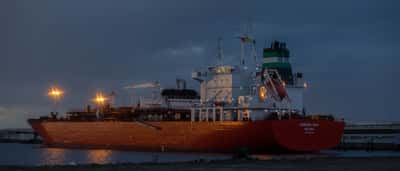
The kingdom's three oil exits are closing. Saudi Arabia shut the East-West crude pipeline on Friday as a precaution after attacks in the Riyadh and Madinah regions. Houthi forces already bar Saudi vessels from the Red Sea. And at 7 p.m. Eastern time Saturday, the United Kingdom Maritime Trade Operations centre said a vessel transiting the Strait of Hormuz “has been struck by an unknown projectile.” In a Sunday update, it said a fire had broken out on board and that local authorities were helping to evacuate the crew.
Iranian state media, cited by the Associated Press, described a commercial cargo ship struck off Qeshm Island with one crew member killed and four wounded. UKMTO has not named its vessel or linked the two accounts, and it did not identify the projectile, the flag, the cargo, or who fired. Reuters, writing early Sunday, added no identifying details and reported no market reaction.
Oil last changed hands in the regular session on Friday, September 11. Brent crude settled at $104.61 a barrel, down $3.02, or 2.81%. West Texas Intermediate settled at $100.05, down $2.43, or 2.37%. Those prints close a month in which WTI rose 23% and Brent 20%. They do not include this fire. The first session that can is Monday.
The East-West pipeline is already shut
Saudi Arabia’s Energy Ministry reported injuries from Thursday’s attacks. It did not disclose the flow that had been moving, the damage, or a restart date.
Reuters reported that the 1,200-kilometer line had been moving 4 million to 5 million barrels a day, or 4% to 5% of global supply. Since the U.S.-Iran war began in late February, that pipeline has been the kingdom’s main path around Hormuz, carrying crude from the Eastern Province to Yanbu on the Red Sea. Those barrels are now stopped. The seaborne gate they were meant to avoid is again under fire.
The Red Sea exit is not open to Saudi cargo either. Houthi forces seized Mayun Island in the Bab el-Mandeb strait last week. Their military spokesman, Yahya Saree, said navigation remained safe for all shipping except Saudi vessels, which are already under a Houthi ban.
Hormuz is the remaining path, with thinner cover
The International Energy Agency, in Friday’s Oil Market Report, said crude losses from the Gulf had narrowed to just below 45%, pointing to bypass flows and U.S. military escorts through Hormuz. Refined products and LPG were still nearly 60%, or 3.7 million barrels a day, below February. The agency projected world oil supply would fall 5.7 million barrels a day this year to 100.7 million, with a Gulf recovery deferred to 2027. That report predates Saturday’s strike.
What is still moving through the remaining door is thin. Reuters reported Wednesday that crude flows through Hormuz in August averaged around 4.3 million barrels a day. Ship-tracking data reported by Reuters on Friday put Hormuz transits at seven vessels on Thursday, down from 11 the day before and well below the 10-day average of 15. The same day, Reuters, citing Baltic Exchange data, said the rate to load a very large crude carrier in the Gulf of Oman for China reached around 450 Worldscale, or roughly $11.50 a barrel, a record this week after what it called the biggest wave of shipping attacks since the war began. West Africa-to-Asia VLCC rates also made record highs, Reuters said.
The Financial Times reported Saturday that Washington had asked tankers to sail the strait only in two daily time slots so air defense could cover them, after Iran stepped up night attacks, and that the protected period had been cut to those two slots around the start of September. The FT did not publish the clock times. Saturday’s strike was overnight in the Gulf. Whether the vessel was inside either remaining slot is not established.
The tanker fund already priced scarce Hormuz hulls
The oil-tanker freight fund BWET, graded D by etf.net against other energy-futures funds, splits its book across Middle East Gulf-to-China tanker-rate forwards, West Africa-to-Continent contracts, cash, and a government money-market fund.
Cash tops four Gulf-to-China months
- Cash & other 30%
- Gov. money market 21%
- MEG-China Oct 13%
- MEG-China Nov 12%
- MEG-China Dec 12%
- MEG-China Sep 7.1%
- W. Africa 5.0%
Its 3.5% expense ratio is the cost outlier in that category. It closed Friday at $726.92, up 11.8%, and is up 113% over the past month, with $264 million in assets.
Friday’s session, total return through September 11. Assets: XLE $42.6 billion, OIH $2.02 billion.
Tanker freight is the sleeve that has already moved.
BWET pulled away from crude and XLE
- BWET · 726.92
- WTI · 100.05
- XLE · 65.14
The U.S.-listed oilfield-services fund OIH, graded B, has barely advanced over the past month while crude rose 23%.
Monday’s session can show whether charterers still fix Gulf-to-China cargoes at 450 Worldscale, and whether the strait draws any transits at all.
ETFs in this story
Frequently asked questions
What happened in the Strait of Hormuz?
UKMTO said a vessel transiting the strait was struck by an unknown projectile and later caught fire, with local authorities helping evacuate the crew, while Iranian state media described a cargo ship hit off Qeshm Island with one crew member killed and four wounded.
Why does the pipeline shutdown matter?
The East-West line had been the kingdom's main way around Hormuz, carrying 4 million to 5 million barrels a day, or 4% to 5% of global supply, and those barrels are now stopped.
Did oil prices react to the strike?
No: the last regular session was Friday, when Brent and WTI both settled lower, and Monday is the first session that can price the fire.
Which fund has moved on this?
The oil-tanker freight fund BWET, graded D and charging a 3.5% expense ratio, is up 113% over the past month, while energy stocks and oilfield services have barely advanced.