South Korea aims to cut Middle East crude to 50% by 2035
On Wednesday, September 23, 2026, Seoul set a 2035 goal of 50% Middle East crude, from about 70% in 2025, and targeted 20 million barrels of extra storage.
Key takeaways
South Korea's Ministry of Trade, Industry and Resources on Wednesday adopted a 10-year plan that sets a 2035 goal of cutting crude dependence on any one region to 50% or less. The world's fourth-largest crude importer still took about 70% of its oil from the Middle East in 2025, most of it through the Strait of Hormuz. The document is the first pan-government resource-security plan since the National Resource Security Special Act took effect in February 2025. It does not name a quota on refiners or a penalty for missing the mix.
On that 2025 book, a 50% share would displace about 550,000 barrels a day, or roughly 201 million barrels a year. Those barrels would have to run in plants built around Middle Eastern heavy sour grades; Atlantic light sweet crude and condensate are a different slate. President Lee Jae-myung said on Saturday, September 12, that wartime buying had already cut Middle East reliance "from 70% to the 50% range in just a few months." Wednesday's plan is how Seoul wants to hold that mix after the strait reopens.
West Texas Intermediate futures were at $89.42 a barrel as of 1:51 a.m. ET Wednesday, down 1.2%, and Brent futures were at $98.60, after Iran offered to reopen Hormuz.
WTI is $16.55 below its September 15 high
- WTI · $89
- Brent · $98
From 70% Middle East crude to a 50% goal
The ministry finalized the Resource Security Basic Plan at the sixth Resource Security Council, timed to 9:30 a.m. Wednesday in Seoul. Minister Kim Jung-kwan said the Iran war had shown that resource security "is not merely a cost issue, but a matter of national survival," and that Seoul would "fundamentally improve the constitution of our resource supply chain" rather than repeat short-term crisis responses.
Trade figures for 2025 put South Korea's crude imports at 2.80 million barrels a day. Middle East volumes were 1.95 million barrels a day, a 69.9% share and a three-year low. Saudi Arabia was the largest supplier. The United States set a record, its fifth consecutive annual increase, and was already the clearest substitute on the water.
The 50% goal is regional, so Iraqi and UAE barrels count against it as much as Saudi crude. Holding the 2025 total constant, Middle East volumes would have to fall to 1.40 million barrels a day. That is an arithmetic reading of the 2025 mix, not a ministry volume target, and it assumes imports stay near 2.80 million barrels a day.
The barrels that fill the gap have been coming from farther away. A US Gulf cargo takes about 50 days to reach Korea, against about 20 days from the Middle East and 14 from Australia. During the Hormuz disruption, refiners borrowed from the strategic reserve against shipping documents and repaid the oil when the delayed cargo arrived.
The extra distance is a bill. A Houston-to-Asia very large crude carrier was about $26 a barrel this week. In 2024, before the war, the standard freight gap between Middle East crude and oil from more distant suppliers was about $2.76 a barrel. The ministry covers part of that gap through refunds on the oil-import surcharge, a levy refiners already pay. It fully offset the added freight on non-Middle East crude from April through June at an estimated 127.5 billion won, then cut the subsidy to 25% of the difference. Korean reports on Wednesday's plan said Seoul would raise that support again, add long-term contracts, and help refiners invest so plants can run Atlantic grades. The government has also been designing a separate Industrial Resource Security Fund for reserve tanks and light-crude conversions; in July the ministry said neither the fund nor its size had been decided.
Twenty million barrels of new tanks by 2030
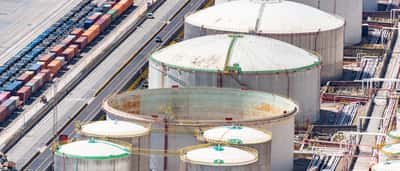
The ministry also adjusted the petroleum stockpiling plan, targeting 20 million barrels of additional storage by 2030. It did not name the sites. Korea National Oil Corporation already runs nine bases with 146 million barrels of capacity and, as of August, 100 million barrels of reserves, excluding some joint-stockpiling oil held for other governments. Twenty million barrels is about seven days of the 2.80 million-barrel-a-day import pace.
That is a modest add to tanks Korea already has. The ministry said the new capacity will serve government stockpiles and joint stockpiling with producing countries, and it introduced a "national total available inventory" that counts public stocks, private inventories and recycled feedstocks together. In May, the four refiners were holding about 90 million barrels of commercial oil. Wednesday's plan tells them to keep more of it.
Thirteen minerals, and China's export list
The same council expanded Korea's critical-minerals list to 51 items from 38 and the stockpiling list to 29 from 24. For the most vulnerable minerals, the stockpile target rises from 180 days to as many as 365. The 13 additions are samarium, europium, gadolinium, praseodymium, promethium, holmium, erbium, thulium, ytterbium, lutetium, fluorite, phosphorus and germanium, of which 10 are rare earths. The designation needs a notice amendment; the ministry did not give the effective date.
Several of those names already sit on China's export-control lists. Beijing in April 2025 restricted samarium, gadolinium, lutetium and other medium and heavy rare-earth items; germanium had been pulled into the same architecture. The European Commission has been building a parallel raw-materials centre and a coordinated stockpiling scheme. Seoul is joining a queue, not opening a new market. A 365-day stockpile, if funded and filled, would be physical demand. Wednesday's paper does not say when the buying starts, in what metal, or from whom.
The Korean refiners in CRAK
The VanEck oil refiners fund CRAK is the concentrated US-listed product with the Korean names. etf.net grades it a C in the Energy (Broad) category under its published method. Country and emerging-market funds also hold SK Innovation and S-Oil at much smaller weights. As of September 20, the three Korean lines were $60.6 million of the fund's $590 million in assets.
Three Korean refiners are 10% of CRAK
Aramco remains S-Oil's largest shareholder, and through the spring Korean refiners were still lifting Saudi, UAE and Kuwaiti barrels even as they added US, African, Brazilian and Australian cargoes. Wednesday's plan does not cancel those term contracts. It asks that by 2035, taken together, they be no more than half the slate. The other half has to sail farther, fit plants built for a different crude, and draw on surcharge refunds if Seoul keeps funding the extra freight. The oil price tonight is still about the strait.
ETFs in this story
Frequently asked questions
What did South Korea actually decide on Wednesday?
The trade ministry adopted a 10-year Resource Security Basic Plan setting a 2035 goal of no more than 50% of crude from any one region.
How much oil would have to be replaced?
On the 2025 import book, a 50% share would displace about 550,000 barrels a day, or roughly 201 million barrels a year.
Are refiners forced to comply?
No, the document does not name a quota on refiners or a penalty for missing the mix.
Who pays for the longer voyages?
Seoul refunds part of the oil-import surcharge, having fully offset added freight from April through June at an estimated 127.5 billion won before cutting the subsidy to 25% of the difference.