The S&P 500's drop understated a broad decline
On Tuesday, September 8, 34% of 5,843 U.S. common stocks advanced as S&P 500 equal-weight fund RSP fell 1.04%, trailing SPY by 0.49 percentage points.
Key takeaways
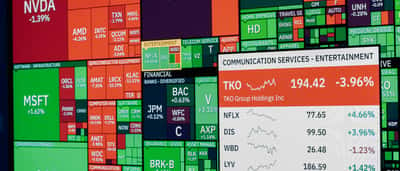
The S&P 500 closed at 7,674.13, down 0.58%, in the first session after the Labor Day weekend. Counted stock by stock, Tuesday was a broad decline that the cap-weighted print only partly showed. No single name produced the move. The only place leadership showed up was a handful of semiconductors inside the Nasdaq-100.
3,638 stocks fell on a 5,843-name board
Of 5,843 U.S. common stocks listed on the NYSE, Nasdaq and NYSE American (ETFs, other funds, foreign listings, and currency and crypto symbols excluded), 1,998 advanced, 3,638 declined, and 207 were unchanged. Advancers were 34% of the board.
Decliners outnumbered advancers 1.8-to-1
- Declined
- Advanced
- Unchanged
- Tue, Sep 8
- Declined 3638
- Advanced 1998
- Unchanged 207
That is the opposite split from Friday, when the S&P 500 fund fell and a slight majority of U.S. stocks still rose. Fifteen of the 20 largest names fell, including Nvidia, Apple, Microsoft, Eli Lilly and JPMorgan Chase. Five of those 20 rose.
Equal-weight lost more than the S&P 500
The S&P 500 fund SPY fell 0.55%. The S&P 500 equal-weight fund RSP, which holds the same companies at the same size, fell 1.04%, nearly twice as much. Equal-weight lagged cap-weight by 0.49 percentage points. The extra loss sat inside the S&P 500 itself, once every name counted the same.
Small-cap stocks, through the Russell 2000 fund IWM, fell 0.45%, in line with cap-weighted large-caps. The weak sleeve was not size. It was the typical large-cap.
Health care is 13.1% of the equal-weight fund and 9.3% of SPY. The health-care sector fund XLV fell 2.5%. Amgen dropped 10% after Novartis reported disappointing trial results in a cholesterol-drug class both companies work in, and it was the largest hole in the equal-weight fund. Eli Lilly and Johnson & Johnson each fell 2.2%. Energy went the other way. Brent crude traded as high as $99.45 a barrel overnight after attacks on Saudi energy facilities. The energy sector fund XLE rose 1.1%, and Exxon Mobil gained 0.7%. One strong sector did not offset a session in which most of the index was under pressure.
One day is weather. Over the past month RSP is down 1.5%, against a 0.9% decline in SPY. Tuesday extended that stretch.
Intel and AMD held the Nasdaq-100 near unchanged
The Nasdaq-100 fund QQQ fell 0.08%. Intel rose 9.1% on reports it planned another increase in processor prices and added 0.19 percentage points to QQQ. AMD rose 5.9% and added 0.20 percentage points. Tesla gained 4.0% and Broadcom 3.0%. Those four more than offset Nvidia's 2.0% decline, which subtracted 0.18 percentage points from the Nasdaq-100 fund and 0.17 from SPY, the largest single hole in the S&P 500 fund.
In SPY, though, the eight biggest contributors and detractors together accounted for only about 15% of the fund's decline. The other ~496 names produced the move.
Tomorrow would have to look different on both measures. Advancers would need a majority on the same 5,843-stock board, and RSP would need to match or beat SPY. Equal-weight remains ahead for 2026, up 14.1% against 12.9% for the cap-weighted fund.
ETFs in this story
Frequently asked questions
If big tech was falling, why did the Nasdaq-100 barely move?
Intel, AMD, Tesla and Broadcom all rose enough to more than offset Nvidia's decline.
Was this a small-cap problem?
No, the Russell 2000 fund fell in line with cap-weighted large-caps; the weak sleeve was the typical large-cap.
Did any sector rise?
Energy did, with the sector fund up 1.1% after Brent crude spiked on attacks on Saudi energy facilities.
Is equal-weight now behind for the year?
No, equal-weight remains ahead for 2026, up 14.1% against 12.9% for the cap-weighted fund.