Von der Leyen puts a €1 billion-a-day China deficit and a minerals buyer on the table
European Commission President Ursula von der Leyen told the European Parliament on Wednesday, September 16, 2026, that the EU's goods-trade deficit with China is €1 billion a day and that Brussels will create a European Corporation on Critical Raw Materials.
Key takeaways
China's Ministry of Commerce, on April 4, 2025, required licences for specified items related to samarium, gadolinium, terbium, dysprosium, lutetium, scandium and yttrium, including metals, alloys, magnets, oxides and mixtures, effective the same day. The ECB later reported that May 2025 shipments of rare-earth magnets fell about 75% year on year and that critically low stocks led several European production lines to shut in June. Reuters, on June 4, 2025, reported that some European auto-supplier plants had halted after running out of rare-earth supplies, and that only about a quarter of hundreds of export-licence requests from auto suppliers since early April had been granted. Mercedes-Benz said then it was discussing stockpiles and was not affected; BMW said part of its supplier network was disrupted while its own plants ran normally.
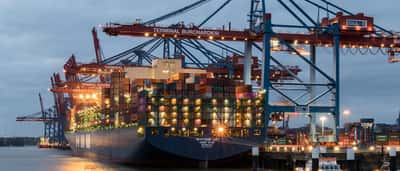
The speech Ursula von der Leyen gave the European Parliament on Wednesday welded that stoppage to a different China problem: a goods-trade deficit she rounded to €1 billion a day. The first is a magnet bottleneck. The second, in the customs data, is Chinese electrical equipment, machinery and vehicles landing in Europe. Trade-defence tools would hit the invoices. A stockpile would not. She offered both as answers, and named no tariff, no investigation, no budget and no statute for either.
The licences that already shut European lines
The dependence figures in the speech are her own. She put the EU at more than 80% dependent on China for many critical raw materials and 90% for some rare earths, and she did not list the materials inside the first bucket. Separate EU research is more specific. A November 2025 European Parliamentary Research Service briefing said the EU sourced all of its heavy rare earths and 85% of its light rare earths from China, and 98% of rare-earth magnets; it put China at 60% of global rare-earth production and 90% of refining. An ECB analysis in 2025 put China's share of euro-area rare-earth imports at 70%. Those are different denominators from von der Leyen's "90% for some rare earths." They point the same direction.
A second Chinese control wave, introduced on October 9, 2025, was suspended on November 7, 2025, until November 10, 2026, according to the same EPRS briefing, which described extraterritorial reach down to magnets containing 0.1% Chinese-sourced rare earths. That suspension is still running. In July 2026, S&P Global reported that China had barred dual-use exports, including rare earths and permanent magnets, to 14 European entities without special authorisation, among them Rheinmetall. On July 29 the defence group said diversified procurement, new supply chains and higher stocks meant the restrictions were having only a minor impact and that it did not foresee a hit to turnover or profit.
Chinese officials had, in the days before the address, already been arguing the other way. EUobserver reported that Foreign Minister Wang Yi, on a call with his French counterpart, urged the EU to choose "constructive dialogue" over more trade-defence measures.
What the speech named, and what it did not
The official transcript is blunt and short on mechanics. "Our trade deficit with China is now €1 billion: a day," von der Leyen said. "Some say the second China shock is looming. But it's already here. It shows in our communities and in factories across our Union." The China dialogue "must now lead to results," she added, because "China's weaker domestic demand means it also needs our European market." Then the line that will be briefed as a threat: "Let me be clear: we will use all the tools at our disposal to rebalance our relationship. Words are good. But deeds are better."
The speech does not name safeguards, anti-dumping duties, the Foreign Subsidies Regulation or the Anti-Coercion Instrument. It does not open a case. It does not attach a date to the dialogue. MLex, in a 4:07 a.m. Eastern report, said she demanded results by October from talks with Beijing on market access, subsidies and overcapacity. That October clock was already on the table: in late June, EU trade chief Maroš Šefčovič and Chinese Commerce Minister Wang Wentao agreed to seek tangible results by then, and on September 2 Šefčovič told Euronews that Beijing must deliver "concrete results" by October or face "harsher measures," with a trip of his own to China due that month ahead of an EU leaders' summit.
The address restated a deadline the trade commissioner had already set.
The €359.8 billion behind €1 billion a day
Eurostat's 2025 accounts are the statistical basis for the round number. The EU exported €199.6 billion of goods to China and imported €559.4 billion, a deficit of €359.8 billion. Spread over 365 days, that is €986 million a day, which the speech rounded to a billion.
The gap has not narrowed this year. Eurostat put the second-quarter 2026 goods deficit with China at €103 billion, the largest quarterly shortfall since €107 billion in the third quarter of 2022. Imports from China in that quarter were €154 billion. In the first half of 2026, the two largest import groups were still electrical equipment and machinery, up €6.2 billion and €4.1 billion from the first half of 2025; vehicles and parts rose €5.9 billion. Duties, safeguards or subsidy probes would land on those three. They would not fill a magnet stockpile.
A corporation with no capital and no statute
"This is why we will establish a new European Corporation on Critical Raw Materials," von der Leyen said. "It will help us obtain and stockpile what we need. For electric cars, chips and batteries, clean tech and defence. And so much more." The speech stops there. It does not specify capital, a funding source, ownership, governance, procurement rules or a legal basis.
The EU already has a raw-materials rulebook. The Critical Raw Materials Act entered into force on May 23, 2024, with 2030 benchmarks of at least 10% of annual EU consumption from domestic extraction, 40% from EU processing, 25% from EU recycling, and no more than 65% from any single third country. On December 3, 2025, the Commission adopted the RESourceEU Action Plan, saying it would set up a European Critical Raw Materials Centre in early 2026 to provide market intelligence, steer and finance projects, and act as a portfolio manager for joint purchasing and stockpiling, and that it would mobilise up to €3 billion over 12 months for alternative supplies. A public consultation on that Centre ran from May 19 to July 29, 2026. Parliament's legislative tracker, updated August 1, still listed the file as announced, with the second-quarter proposal unpublished. The same plan said a stockpiling pilot would become operational in early 2026.
The Commission's letter of intent, issued Wednesday, lists the corporation among new initiatives for the year ahead and adds no numbers. Neither the speech nor the letter identifies the corporation as that Centre, assigns it the €3 billion, or reports the pilot as running.
The funds that actually hold this
In Frankfurt morning trade as of 7:49 a.m. Eastern, BMW was 1.3% lower, Volkswagen 2.7% lower and Mercedes-Benz 2.6% lower. Broad Europe funds barely touch those carmakers, and nothing in Tuesday's closes of the iShares MSCI Eurozone ETF EZU or the Vanguard FTSE Europe ETF VGK, both graded A by etf.net, prices the speech.
The rare-earth wrapper is more direct, and less clean. The VanEck Rare Earth and Strategic Metals ETF REMX, graded A in etf.net's critical-materials category, holds companies that produce, refine and recycle rare earths and strategic metals. It ran $1.97 billion as of Wednesday, with 34 holdings and a 0.53% expense ratio.
Albemarle leads a book that still holds China Northern
The book includes non-Chinese miners and Chinese producers. It is not a pure bet on Brussels diversifying away from Beijing.
REMX closed Tuesday down 0.91%.
REMX slid to $68.30 in the week before the speech
It was already 30% lower over three months, sitting 39% below its 52-week high of $111.55. That path predates the Strasbourg speech. No issuer print after the address prices the corporation or the trade threat.
The next dated events belong to other people. Šefčovič is due in Beijing in October. EU leaders meet that month. The second Chinese control wave stays suspended until November 10. The Critical Raw Materials Act's 2030 clocks are still four years out.
ETFs in this story
Frequently asked questions
What did von der Leyen actually announce?
A European Corporation on Critical Raw Materials to obtain and stockpile materials, with no capital, funding source, ownership, governance or legal basis named.
Where does the €1 billion a day come from?
Eurostat's 2025 goods accounts show a deficit with China of €359.8 billion, which works out to €986 million a day, rounded up in the speech.
Did she threaten specific trade measures?
No: she said the EU would use all tools at its disposal but named no tariff, safeguard, anti-dumping duty or investigation, and opened no case.
Is there an ETF that tracks this theme?
The VanEck Rare Earth and Strategic Metals ETF is the closest wrapper, but it holds Chinese producers alongside non-Chinese miners, so it is not a clean bet on Europe diversifying away from Beijing.


