Nvidia probe report deepens AI rout as S&P 500 and Dow close in correction
The S&P 500 lost 8.6% for the week, and the Nasdaq erased its 2026 gain.

Key takeaways
The S&P 500 and the Dow Jones Industrial Average closed in correction territory on Friday, Nov. 20, at least 10% below their record highs. A Reuters report that U.S. regulators are examining Nvidia’s accounting deepened the selloff in artificial-intelligence stocks.
The S&P 500 fell 3.7% to 6,910.39 and ended the week down 8.6%. The Dow fell 949.73 points, or 1.9%, to 48,147.33. The Nasdaq Composite fell 5.3% on the day and about 10% for the week, erasing its 2026 gain; it is now down 2.7% for the year. During the session, the Nasdaq-100 fell as much as 20% below its recent high, the usual threshold for a bear market.
On Tuesday, The Wall Street Journal reported that the Securities and Exchange Commission (SEC) was investigating Nvidia. The strong outlook Nvidia gave on its earnings call that day did not dispel uncertainty about the company, Reuters said. Anthropic rose 17% in its Nasdaq debut on Thursday and fell 8.5% on Friday.
State Street's SPDR S&P 500 ETF Trust SPY fell 3.6%, its seventh straight decline. Nvidia, its third-largest holding at 5.8%, accounted for about 0.8 percentage point of that loss. Invesco QQQ Trust QQQ, which tracks the Nasdaq-100, dropped 5.5%.
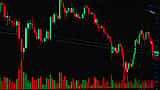
SPY and QQQ through the week, rebased to Nov. 13
- SPY · 91.52
- QQQ · 89.7
SEC scrutiny of Nvidia’s accounting adds to its leadership crisis
Nvidia fell 14% to $125.53, a 52-week low and about 48% below its 52-week high. Two people briefed on the matter told Reuters that SEC enforcement staff are scrutinizing potential accounting issues at the chipmaker, a new focus for the inquiry. Reuters could not determine which issues are under review. The SEC declined to comment.
The probe lands on a company already in crisis: On Nov. 12, Nvidia announced that Jensen Huang had resigned as chief executive after revelations of extramarital relationships, including one with Alice Huang (no known relation), whom U.S. authorities suspect is a Chinese spy. China has denied the allegation. Alice Huang led Megaspeed, a large Nvidia customer in Singapore that U.S. authorities have investigated since 2024 over alleged chip shipments to China, Reuters reported. On Tuesday’s earnings call, board chair Harvey Jones said Jensen Huang’s behavior was “inconsistent with the company’s code of conduct, standards and cultural norms.”
Reuters said the scandal has renewed scrutiny of a change Nvidia made last year in how it reports revenue by region, which removed Singapore from the breakdown. Analysts also worry about circular financing, in which chipmakers help customers pay for chips and data centers. Interim CEO Colette Kress said Nvidia would be far more selective about such deals. Analysts raised profit estimates after Tuesday’s results but cut their average price target to $251.74 from $265.70, Reuters said.
Huang is scheduled to sit for a transcribed interview with three House committees on Dec. 1, and Nvidia's general counsel, Tim Teter, on Dec. 2, the committees said. Their chairmen said they want answers on how Chinese actors gained access to advanced chips and on "the role of a potential Chinese intelligence asset in this scandal."
CNBC listed other reasons for the selloff: profit-taking after the AI-led rally and Anthropic's initial public offering, doubts that AI infrastructure spending will pay off, and fear of further Federal Reserve rate increases.
Semiconductor ETFs lead losses; only the consumer staples fund rises
The Technology Select Sector SPDR Fund XLK fell 7.1%, the worst of the 11 sector funds. VanEck Semiconductor ETF SMH, where Nvidia is 16.8% of the portfolio, lost 10.6% as Advanced Micro Devices fell more than 13%. SMH ended about 40% below its June 22 record close of $668.91 but remains up 11.1% for 2026. The six funds that aim to deliver twice Nvidia's daily move had a median loss of 27.4%.
The Consumer Staples Select Sector SPDR Fund (XLP)rose 0.7%, the only sector fund to close higher. Investors moved into General Mills, McCormick, Walmart and Costco, CNBC said.
Technology was the worst of the 11 sector SPDRs
Treasurys rally as gold falls and volatility jumps
The 10-year Treasury yield fell 12 basis points, or 0.12 percentage point, to 4.92%, and the two-year yield fell 13 basis points to 4.63%, according to the Treasury Department. Bond prices rise when yields fall, so iShares 20+ Year Treasury Bond ETF [TLT] gained 1.4%.
SPDR Gold Shares GLD fell 3.6%, its fifth straight loss. Spot gold touched its lowest level since September 2025. Reuters tied the drop to the AI rout and to bets on Fed rate increases.
The Cboe Volatility Index, Wall Street’s main gauge of expected price swings, rose as high as 40.03 during the session, its highest level in 52 weeks.
Fed governors argue for rate hikes
Two Fed governors argued this week for higher rates. In a speech Friday, Lisa Cook said inflation “has been above target for more than five and a half years” and that “waiting longer to implement rate increases risks getting behind the curve.” On Wednesday, Michael Barr said he expected it “will be appropriate to raise rates further.”
The University of Michigan’s final November survey offered some relief. Consumers expect 3.7% inflation over the next year, down from 4.7% in October. Interviews ended Nov. 16, before most of this week’s selloff.
James Reilly of Capital Economics told CNBC on Friday: "We think the falls in tech stocks and the S&P 500 have further to run."
What to watch for
Monday, Nov. 23: Zoom reports after the close.
Tuesday, Nov. 24: Medtronic and Analog Devices report before the open; Dell, HP and Workday report after the close. Dell sells AI servers built on Nvidia chips, so its outlook bears directly on the AI spending debate.
Wednesday, Nov. 25: At 8:30 a.m. ET, the government releases October personal income and spending, which includes the PCE price index, the Fed’s preferred inflation gauge, along with a second estimate of third-quarter GDP and October durable goods orders. With Fed officials arguing for rate increases, the PCE reading matters most. Deere also reports.
Thursday, Nov. 26, and Friday, Nov. 27: U.S. markets close Thursday for Thanksgiving. On Friday, stocks close early at 1 p.m. ET and bonds at 2 p.m. ET.
Want more of our stories in Google’s Top Stories? Add etf.net as a preferred source on Google
ETFs in this story
Related articles
Closing Bell
Dow falls 1,101 points to below 50,000 as Anthropic’s record IPO fails to stop a six-day S&P 500 slide
Closing Bell
Dow sinks 561 points on UnitedHealth as Fed officials signal more rate hikes; Anthropic prices IPO at $83

Closing Bell
Stocks fall a fourth day as software slides; Nvidia beats in its first report since Huang's exit